
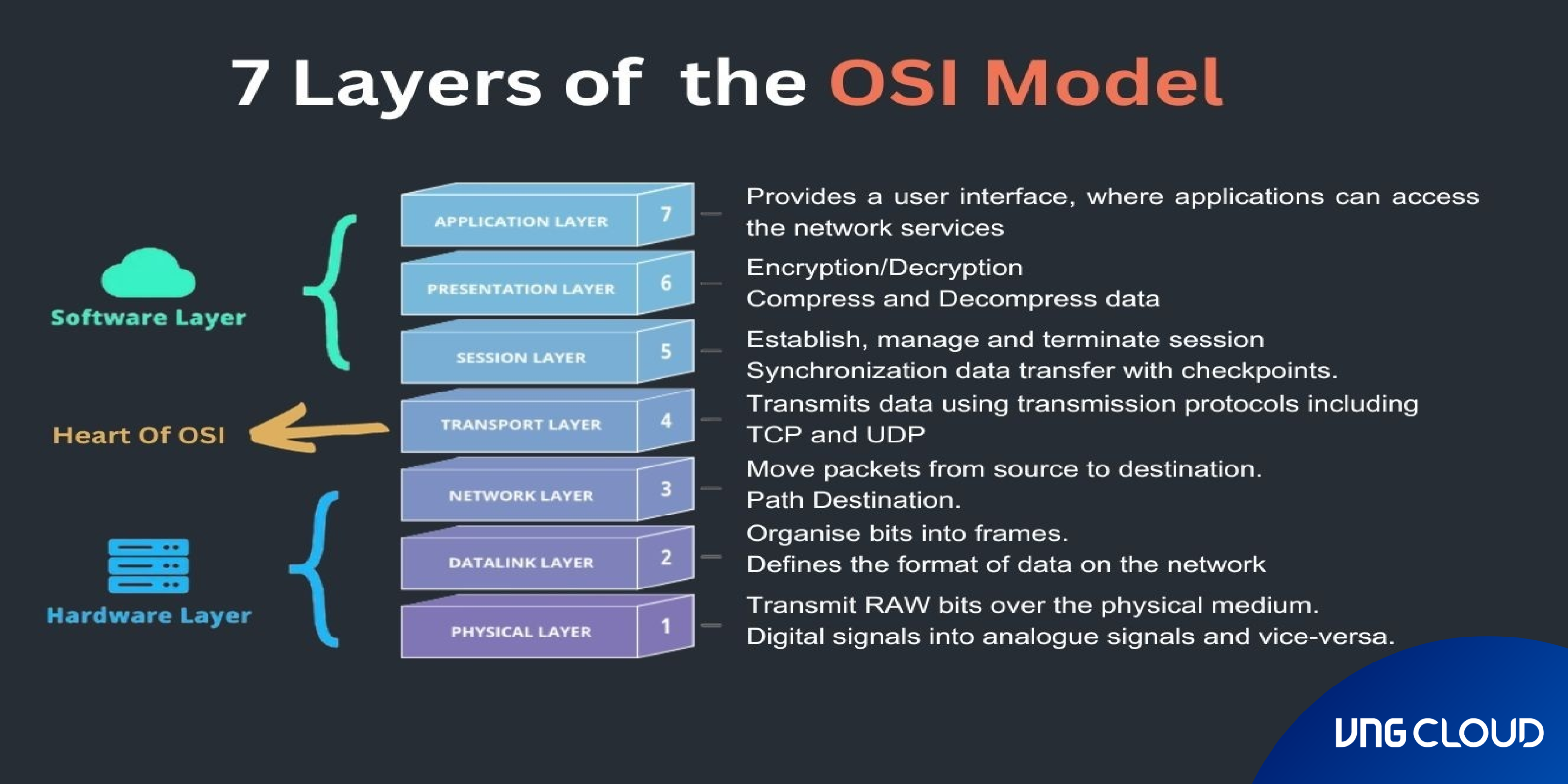
In the modern security ecosystem, the application layer (Layer 7) has become a hotspot for cyberattacks, as traditional firewalls (Layer 3/4) are not capable of detecting or blocking threats that occur at the application layer—where hackers typically exploit vulnerabilities in web systems, APIs, and online applications.
In Southeast Asia, the situation is even more alarming: 2024 recorded double the number of cyberattacks compared to 2023, with 43% of attacks targeting small and medium-sized enterprises (SMEs). The core reasons remain familiar — SMEs rarely invest in structured security programs, lack dedicated cybersecurity personnel, and often operate their infrastructure with a “fix it when it breaks” mindset.
In this article, we explore the attack landscape targeting SMEs, the persistent vulnerabilities at the application layer, and how vWAF — VNG Cloud's Web Application Firewall — addresses these challenges using Semantic Analysis and Machine Learning (ML).
Layer 7 vulnerabilities: the “blind spot” of traditional firewalls in SME environments
Recent statistics reveal a strong shift in attackers targeting smaller businesses:
- 43% of global cyberattacks are directed at SMEs (Qualysec, 2025).
- Cyberattacks in Southeast Asia doubled in 2024 compared to 2023 (Positive Technologies, 2024).
- The average global cost of a data breach reached USD 4.88 million in 2024 (IBM / Ponemon, 2024).
- 80% of small businesses still lack a formal cybersecurity policy (Qualysec, 2025).
Combined with the sharp rise in attacks across Southeast Asia, it is clear that SMEs are facing higher risks than ever. The common weaknesses below explain why smaller organizations have increasingly become “prime targets” in modern attack campaigns.
1. Application-layer vulnerabilities: a technical gap still left open
Most SMEs still rely on traditional firewalls — which only control IPs, ports, and protocols without understanding the actual content inside requests. This leaves login forms, APIs, CMS platforms, file uploads, SQL payloads, and malicious scripts as ideal entry points for attackers.
When applications run directly on VMs without a dedicated protection layer for Layer 7, even a small bug in the code or a faulty plugin can “unlock” the entire system.
2. Rising financial risks
Every time a website is attacked or goes down, SMEs lose not only revenue but also customer trust — the hardest thing to rebuild. The cost of incident response is often 5–10 times higher than investing in prevention from the start. Recovery time itself is a serious loss: every minute of downtime can cost a business a real customer.
3. Fragmented security infrastructure, difficult to operate
Many SMEs use VMs, CDNs, Load Balancers, and SSL from multiple platforms. Synchronizing policies and monitoring centrally becomes nearly impossible. When incidents occur, teams must manually trace logs across different systems, while free or open-source tools often lack clear alerts and transparent reporting.
4. Limited operational capacity, no dedicated security team
Most SMEs do not have a SOC or cybersecurity specialists. Developers often handle everything — operations, bug fixes, and attack response — resulting in slow reaction times, incorrect patching, or inability to recover quickly. This is why security needs to be “service-driven”: easy to enable, simple to manage, and automatically monitored by the platform.
As digital operations accelerate, SMEs have become ideal targets for attackers — holding valuable data while lacking the security resources to protect it.
vWAF: Web Application Defense Layer for SMEs Amid Rising Cyberattacks
As cyberattacks become increasingly sophisticated and focus on the application layer, businesses — especially SMEs — need a protection layer that goes beyond the capabilities of traditional firewalls. vWAF (Web Application Firewall) is designed to address this exact challenge: an intelligent “shield” placed in front of web applications that proactively blocks attacks and minimizes operational risks.
The new vWAF service is a next-generation web application firewall, built on the Nginx platform and operating as a Reverse Proxy. It sits between users and web applications, filtering, monitoring, and analyzing all HTTP/S traffic.
By combining Semantic Analysis with Machine Learning models, vWAF achieves a detection accuracy of up to 99.995%, with a false positive rate of only 0.007%, allowing businesses to operate securely without alert fatigue. vWAF automatically blocks the most common attack types listed in the OWASP Top 10, including SQL Injection, XSS, RCE, SSRF, CSRF, HTTP Flood DDoS, and malicious bots.
Key Features of vWAF:
- OWASP Top 10 Protection: SQLi, XSS, CSRF, RCE, SSRF, and more.
- Real-time Dashboard: Monitor attacks, source IPs, and risk levels.
- Bot & Crawler Protection: Rate Limiting, CAPTCHA, and Behavior Analysis.
- SSL/HTTPS Inspection: Comprehensive traffic decoding and analysis.
- Flexible Policy Customization: Tailor rules for each application and endpoint.
vWAF Operation Mechanism and Attack Detection Capabilities
1. Syntax & Semantic Analysis
- Syntax: Accurately identifies user inputs.
- Semantic Analysis: Evaluates the intent of code segments to detect potentially malicious behavior.
2. Deep Decoding and Behavior Analysis
vWAF performs deep decoding of HTTP request parameters, including URL encoding, Base64, and Hex encoding, to detect hidden payloads. Machine Learning models then analyze the behavior of the requests to determine whether they constitute an attack.
3. Detection and Prevention of Common Attacks
- Malicious file uploads.
- Remote Code Execution (RCE).
- File Inclusion attacks.
4. Bot and DDoS Protection
- CAPTCHA verification.
- Rate Limiting.
- Behavior analysis to block malicious bots and traffic.
5. Real-time Monitoring and Response
- Track all attack events.
- Manage blacklist/whitelist.
- Real-time alerts and notifications.
6. Protection with Custom Rules
vWAF supports a flexible rules system, allowing detection and prevention of threats tailored to each deployment environment. Configuration is simple via a GUI, without the need to edit YAML files as in traditional methods.
Benefits for Businesses Using vWAF:
- Application Layer Protection: Blocks SQLi, XSS, RCE at Layer 7.
- Easy Activation: Pre-integrated with VNG Cloud — just enable and start protecting.
- Reduced Downtime Risk: Minimizes disruptions from attacks or unpatched vulnerabilities.
- Operational Cost Savings: No need for dedicated security experts or separate hardware.
- Automatic Alerts & Reporting: Real-time alerts and transparent periodic statistics.
- Enhanced Compliance & Reputation: Supports ISO, PCI DSS, and infrastructure audits.
- Focus on Business Growth: Operate without worrying about infrastructure interruptions.
Frequently Asked Questions (FAQ)
1. How is a WAF different from a traditional network firewall?
A network firewall protects IPs, ports, and protocols (Layer 3/4), whereas vWAF analyzes HTTP/HTTPS content (Layer 7) to block attacks targeting web applications, such as SQLi, XSS, and RCE.
2. Do I need complex installation or configuration?
No. vWAF is pre-integrated into the VNG Cloud platform — simply enable the “Enable Web Application Firewall” option when creating a VM.
3. Does vWAF provide automatic monitoring and alerts?
Yes. The system monitors traffic in real-time, sends alerts via email, and generates periodic reports directly on the VNG Cloud Portal.
4. Will the service affect website performance?
Minimal impact. vWAF uses local infrastructure optimized for low latency, ensuring smooth website operation.
5. Can I customize rules for my applications?
Yes. vWAF allows you to create custom rules for individual applications, APIs, or domains according to your security needs.
6. Is vWAF compatible with Load Balancers or CDNs?
Yes. vWAF works in sync with VNG Cloud’s Load Balancers and CDNs to provide multi-layered security.
7. How is the service billed?
vWAF is charged based on the number of domains and traffic, allowing businesses to pay only for what they use, without investing in separate hardware.
8. Do I get technical support if an attack occurs?
Yes. VNG Cloud’s 24/7 support team assists with analysis and incident response promptly, ensuring system safety.
vWAF delivers comprehensive web application protection, enabling businesses to operate securely, reliably, and confidently expand services in an increasingly complex digital environment.